
Has workplace noise affected your hearing?
Comprehensive hearing assessments and clinical documentation for people concerned about long-term occupational noise exposure.
Years of workplace noise can permanently affect hearing
Long-term exposure to loud workplace noise can lead to Noise-Induced Hearing Loss (NIHL), often called industrial deafness. People who have worked in construction, mining, manufacturing, transport, agriculture, engineering, aviation or heavy industry may notice gradual hearing changes over time.
At Welfast Hearing, we provide comprehensive audiology assessments to identify and document hearing loss. Where appropriate, our clinicians can provide professional reports and discuss suitable next steps.

Could your hearing loss be work-related?
Occupational hearing loss often develops gradually. These common signs are a reason to arrange a professional assessment.
Repeated Conversations
Frequently asking people to repeat themselves.
Difficulty in Noise
Struggling to follow speech in busy environments.
Higher TV Volume
Needing television or radio louder than others prefer.
Tinnitus
Ringing, buzzing or other persistent sounds in the ears.
Missed Warnings
Difficulty hearing higher-pitched voices or warning signals.
Gradual Change
Noticing hearing has worsened progressively over time.
Occupations commonly exposed to hazardous noise
Industrial hearing loss can affect people across many sectors, including:
- Construction and mining
- Manufacturing and metal fabrication
- Farming and agriculture
- Transport, logistics and railways
- Aviation
- Defence and military
- Mechanical workshops
- Forestry
- Heavy equipment operation
Protection reduces risk, but past exposure still counts
The risk of hearing damage depends on noise intensity, duration, frequency of exposure and the effectiveness and consistency of hearing protection. A detailed employment and noise-exposure history supports the clinical assessment.
If conversations, alarms or high-pitched sounds have become harder to hear, an assessment can clarify the type and degree of hearing loss.
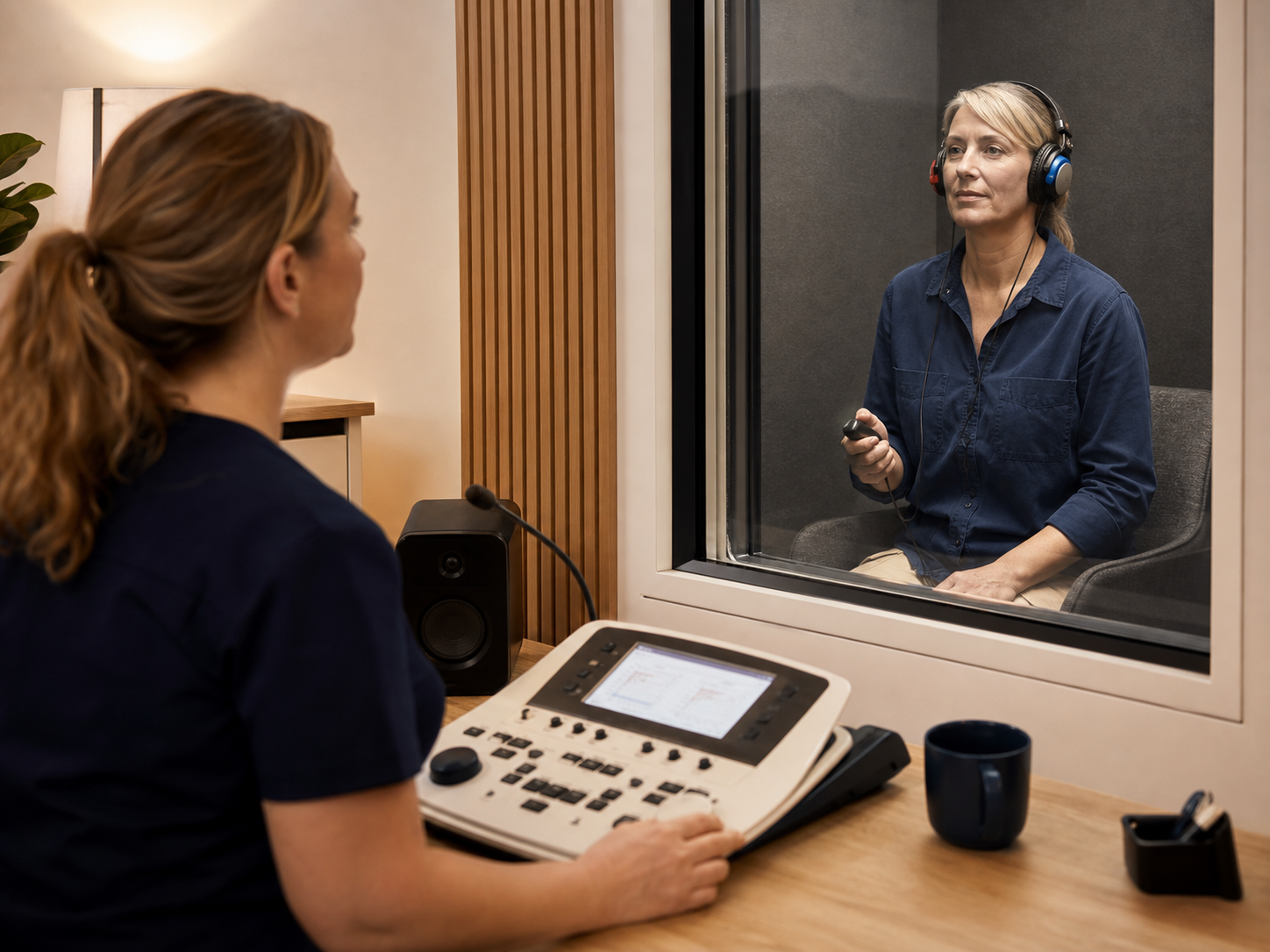
Clinical assessment, reporting and ongoing care
Our experienced hearing professionals can provide:
- Comprehensive diagnostic hearing assessments
- Digital audiometry and hearing evaluation
- Tinnitus assessment
- Professional hearing reports
- Hearing aid recommendations and fitting
- Ongoing hearing care and rehabilitation
- Clinical documentation for eligible claims
Where hearing loss appears consistent with occupational noise exposure, we can discuss the next clinical steps and, where appropriate, suggest seeking advice from an experienced compensation professional.
A hearing assessment is an important first step
Eligibility for workers’ compensation or other entitlements varies between Australian states and territories. Relevant factors may include:
- Employment and occupational history
- Type, level and cause of hearing loss
- Duration and intensity of workplace noise exposure
- Applicable legislation and claim thresholds
- Jurisdiction-specific time limits
Important: Welfast Hearing provides audiology services and clinical documentation, not legal advice or a guarantee of claim eligibility or outcome. Consider obtaining advice from the relevant workers’ compensation authority or a qualified legal professional.
Professional support throughout your hearing-care journey
- Experienced hearing professionals
- Comprehensive diagnostic assessments
- Modern hearing technology
- Personalised hearing solutions
- Ongoing support and aftercare
- Clear clinical explanations and documentation
Do not ignore changes in your hearing
If you have spent years working in noisy environments and noticed changes in your hearing, arrange a comprehensive assessment to better understand your hearing health and the support options that may be available.