Acoustic Reflex Testing

ACOUSTIC REFLEX TESTING

Advanced assessment of middle ear and auditory nerve function

Accurate objective testing for comprehensive hearing care, evaluating the middle-ear muscles, auditory nerve, facial nerve and brainstem pathways.

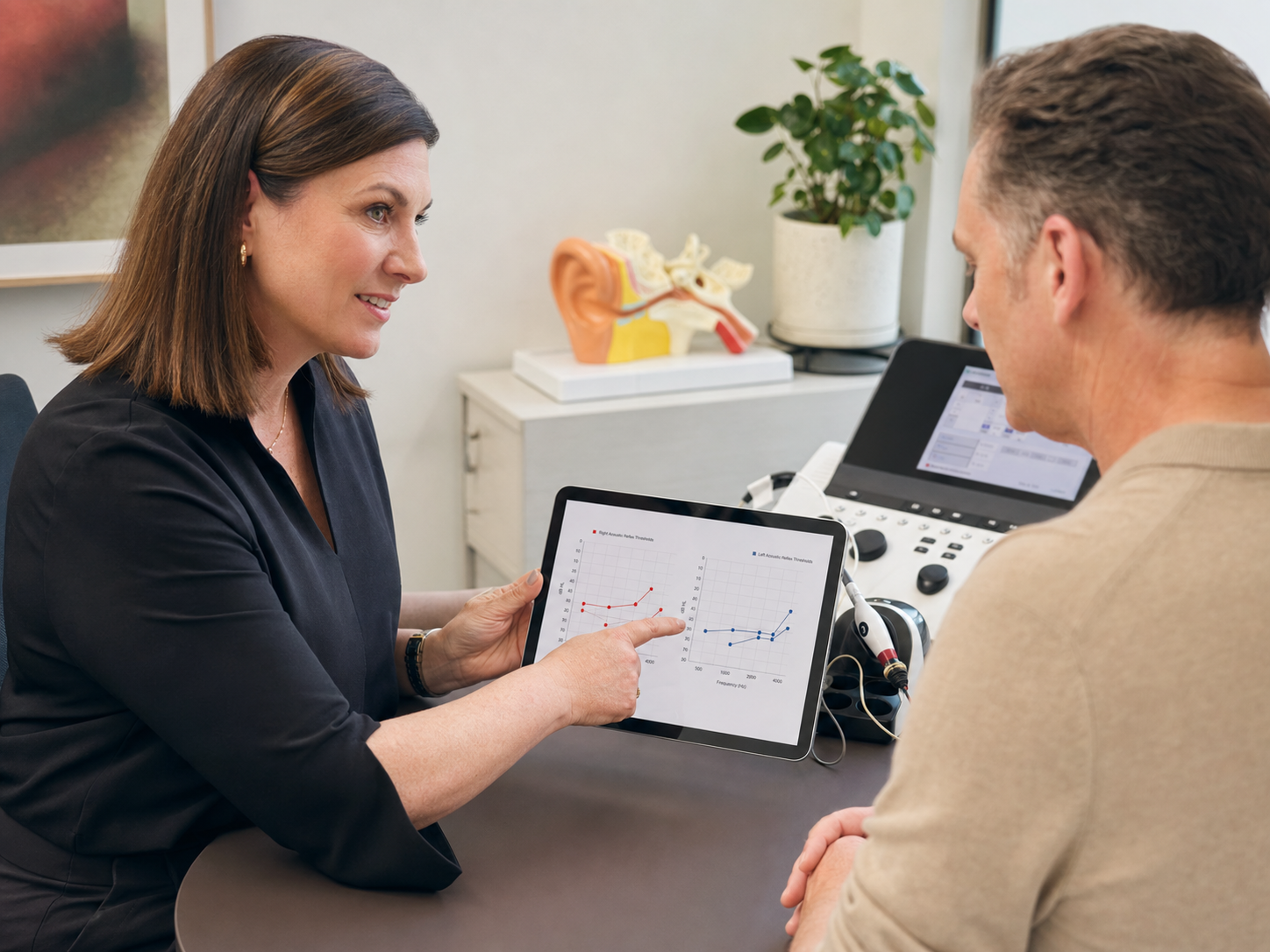
A hearing clinician conducting a speech audiometry assessment

Accurate diagnostic testing for comprehensive hearing care

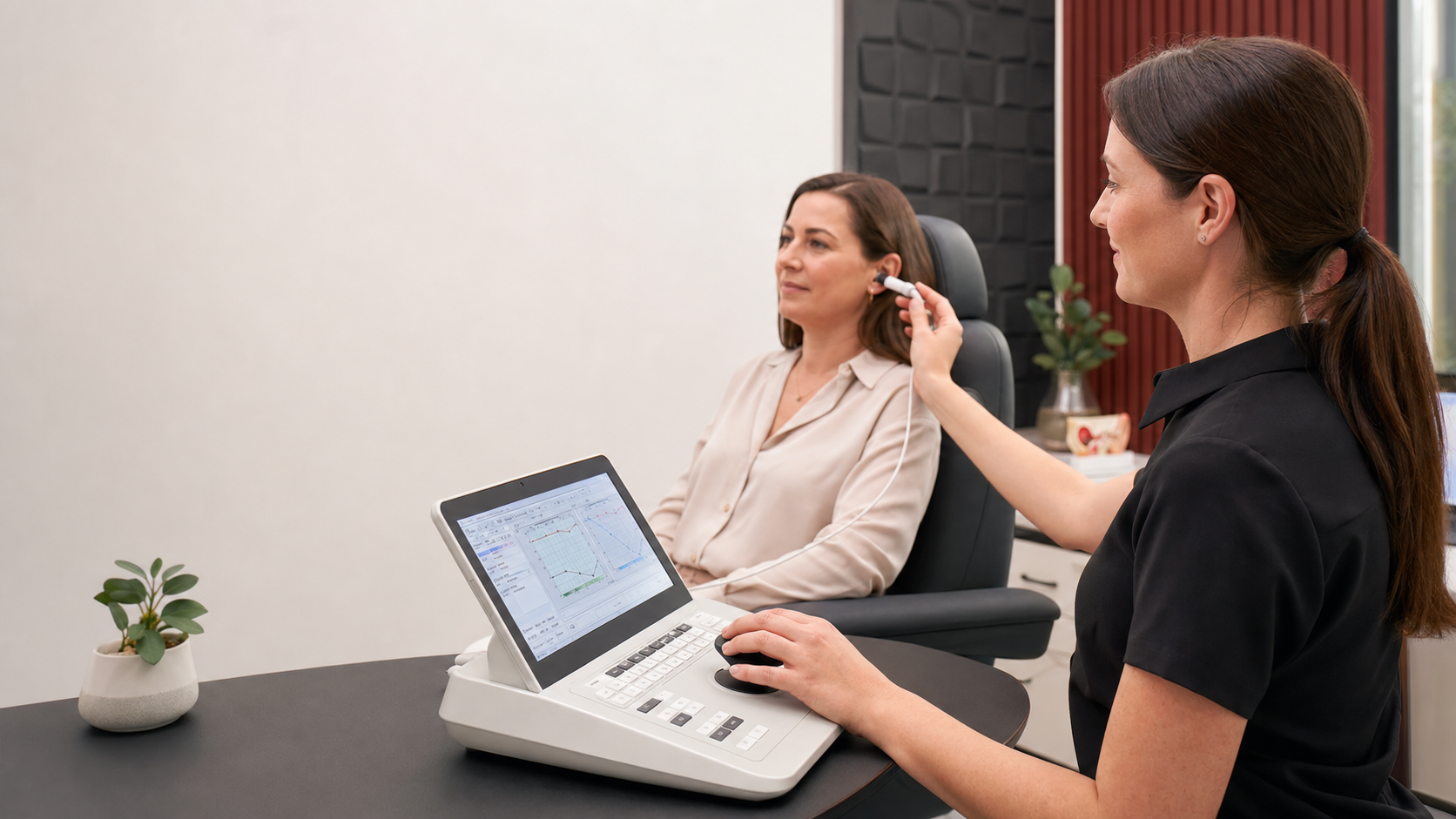
At Welfast Hearing Australia, Acoustic Reflex Testing evaluates the natural contraction of a tiny middle-ear muscle in response to louder sounds. It provides information about the auditory nerve, facial nerve, middle ear and brainstem pathways.

Combined with Pure Tone Audiometry, Speech Audiometry and Tympanometry, it helps clinicians understand unexplained hearing loss, tinnitus, dizziness, facial nerve concerns and abnormal hearing results.

At a glance

A hearing clinician explaining speech recognition results

What is Acoustic Reflex Testing?

The test measures the involuntary contraction of the stapedius muscle inside the middle ear. This muscle responds automatically to loud sounds and helps protect the inner ear. Assessing the reflex can reveal abnormalities not detected by routine hearing tests.

Why is Acoustic Reflex Testing important?

Hearing requires healthy communication between the ear, hearing nerve, facial nerve and brain. Acoustic reflexes provide objective information about these pathways and support a more accurate diagnosis.

Because this is an objective test, it is highly reliable for adults and children.

Who should have Acoustic Reflex Testing?

Your clinician may recommend this assessment if you experience:

What does it measure?

PTA measures hearing sensitivity from approximately 250 Hz to 8000 Hz—the range covering sounds most important for everyday communication.

What can Acoustic Reflex Testing help identify?

Sensorineural and conductive hearing loss
Helps distinguish inner-ear or auditory-nerve loss from middle-ear conditions.

Auditory and facial nerve disorders
Assesses cranial nerves VIII and VII involved in the reflex pathway.

Otosclerosis, brainstem disorders and hyperacusis
Supports investigation of middle-ear bone changes, neural pathways and sound sensitivity.

Benefits of Acoustic Reflex Testing

This advanced objective assessment adds important clinical evidence to a complete diagnostic hearing evaluation and strengthens treatment planning.

What happens after the test?

Your clinician explains the results in relation to your symptoms and other hearing tests, then recommends the most appropriate next step.

Why choose Welfast Hearing Australia?

We use modern audiological technology and evidence-based clinical practice to provide accurate diagnosis, individual recommendations and supportive ongoing care.

Frequently asked questions

It evaluates middle-ear muscles, auditory and facial nerves, and brainstem pathways to help diagnose hearing and neurological conditions.
It is an advanced diagnostic assessment that complements standard hearing tests by evaluating automatic responses rather than hearing sensitivity.
No. It is safe, non-invasive and generally causes no discomfort.
It usually takes between 10 and 15 minutes and is often part of a comprehensive assessment.
No special preparation is required. Simply attend your appointment as scheduled.

Ready to hear life more clearly?

Friendly, independent hearing care across the Central Coast and Lake Macquarie.

Copyright 2026 Welfast Hearing.All rights reserved.