
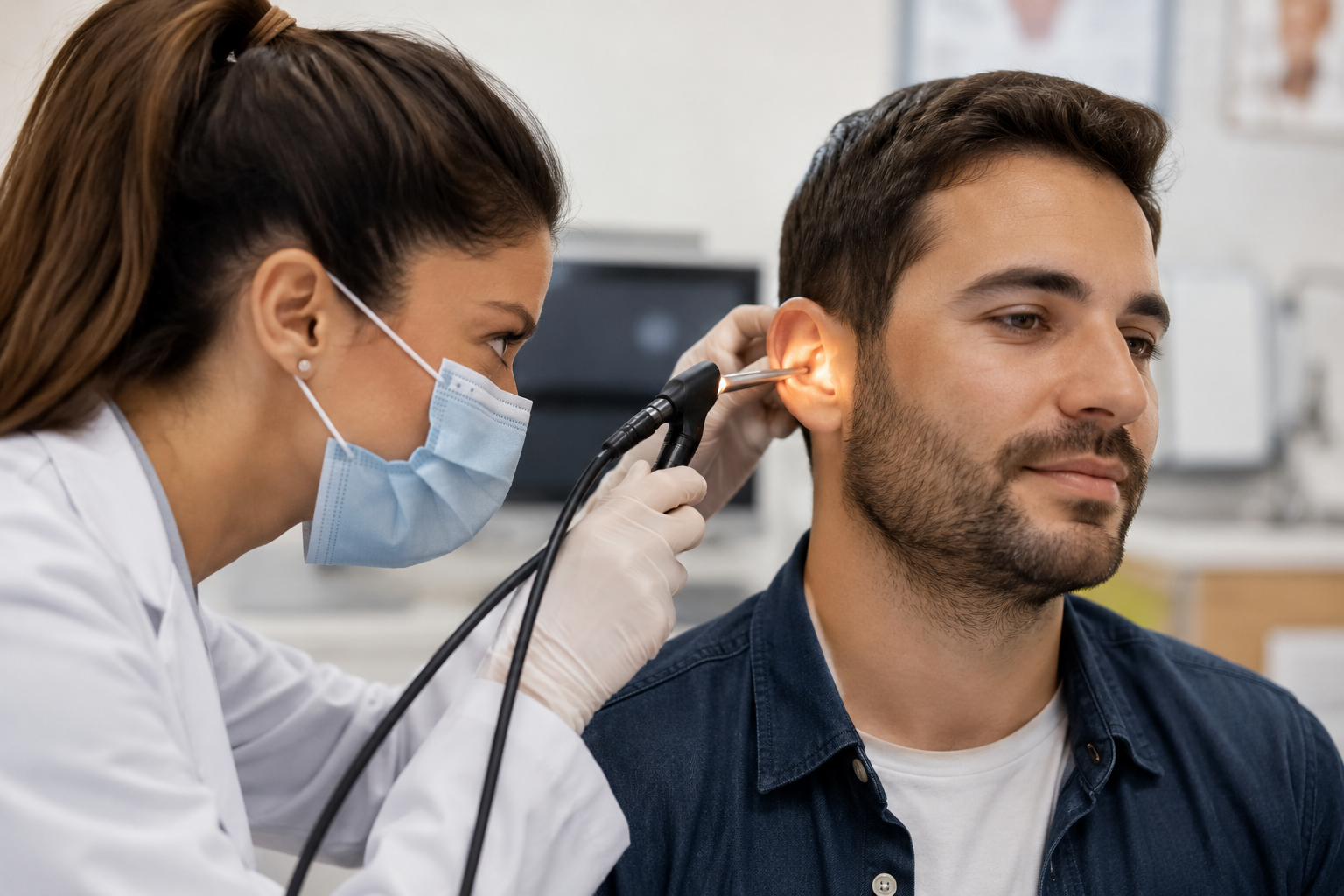
Ear wax problems are often underestimated, but for hearing aid users, even a small blockage can significantly reduce sound clarity, distort speech, and affect device performance. What starts as mild muffled hearing can quickly turn into communication difficulty, device feedback noise, or complete sound blockage.
Understanding ear wax removal for hearing aid users is not just about cleanliness it’s about protecting hearing health, maintaining device performance, and preventing avoidable complications that affect daily life. The challenge is that symptoms often develop slowly, making early detection difficult without proper guidance.
What Does Ear Wax Removal Mean for Hearing Aid Users?
Ear wax removal for hearing aid users is a safe clinical procedure that clears excess earwax using methods like micro suction or professional manual cleaning. It is recommended when symptoms such as muffled hearing, ear fullness, or hearing aid feedback appear, helping restore clear hearing and device performance.
Important Highlights You Shouldn’t Miss
- Hearing aid users are more prone to ear wax buildup
- Wax can block sound and reduce device efficiency
- Micro suction is the safest professional removal method
- Cotton buds and home cleaning tools worsen blockage
- Regular ear checks prevent hearing and device issues
What is Ear Wax Removal for Hearing Aid Users?
Ear wax removal for hearing aid users refers to medically guided procedures used to safely remove excess cerumen (ear wax) that interferes with hearing clarity and device function.
According to audiology standards, hearing aid users are at higher risk of wax buildup because devices partially block the natural self-cleaning mechanism of the ear canal.
Experts recommend professional removal methods like micro suction for safe and precise cleaning without damaging the ear canal or hearing device.
Why Ear Wax Is a Serious Problem for Hearing Aid Users
Ear wax is naturally protective, but when it builds up excessively, it becomes a barrier rather than a defense.
How it affects hearing aids
- Blocks sound output from reaching the ear
- Causes feedback or whistling noise
- Clogs receivers and filters
- Reduces clarity of speech
- Increases device maintenance needs
Clinical guidelines suggest untreated wax buildup is one of the most common causes of temporary hearing aid failure.
Do Hearing Aids Increase Ear Wax Buildup?
Yes hearing aids can indirectly increase wax accumulation.
Why this happens
- Devices partially block ear canal airflow
- Wax naturally gets pushed inward
- Heat and moisture increase wax production
Audiologists confirm that hearing aid users require more frequent ear monitoring compared to non-users.
Signs You Need Ear Wax Removal Immediately
Early detection is critical to avoid complications.
Common warning signs
- Muffled or reduced hearing
- Ear fullness or pressure
- Hearing aid feedback noise
- Itching or irritation inside ear
- Sudden drop in sound clarity
- Device not functioning properly
Healthcare professionals recommend immediate evaluation if symptoms persist beyond a few days.
How Ear Wax Removal Works
Micro suction is the most widely recommended method.
Procedure overview
- Ear examination using otoscope or microscope
- Identification of wax blockage
- Gentle suction removal using precision device
- Final inspection for full clearance
Micro Suction vs Other Ear Wax Removal Methods
Micro Suction
- Safety: Very high
- Effectiveness: High
- Hearing aid friendly: Yes
- Risk level: Low
Ear Syringing (Irrigation)
- Safety: Medium
- Effectiveness: Medium
- Hearing aid friendly: Limited
- Risk level: Moderate
Cotton Buds
- Safety: Low
- Effectiveness: Low
- Hearing aid friendly: No
- Risk level: High
Ear Candling
- Safety: Unsafe
- Effectiveness: Ineffective
- Hearing aid friendly: No
- Risk level: Very high
What Causes Ear Wax Build-Up?
Understanding causes helps prevent recurrence.
Main factors
- Hearing aid usage blocking natural wax flow
- Overproduction of cerumen (genetics)
- Improper cleaning habits
- Narrow ear canals
- Aging-related changes
According to audiology research, most buildup cases are linked to improper cleaning techniques.
What You Should Avoid
Avoiding harmful practices is crucial.
- Cotton buds (push wax deeper)
- Ear candles (unsafe and ineffective)
- Sharp objects (risk of injury)
- Self-irrigation at home
- Excessive oil drops without guidance
Clinical experts confirm these methods often worsen blockages instead of solving them.
How to Prevent Ear Wax Problems
Prevention reduces long-term issues.
Best practices
- Clean hearing aids daily
- Replace wax guards regularly
- Keep ears dry and clean
- Schedule routine hearing checks
- Avoid inserting objects into ear canal
Experts recommend hearing aid users undergo ear checks every 3–6 months.
When to See a Professional Immediately
Seek urgent care if:
- Sudden hearing loss occurs
- Severe ear pain develops
- Hearing aid stops working
- Dizziness or imbalance appears
Early intervention prevents infection and long-term hearing complications.
Cost & Professional Care Insight (Welfast Hearing)
Ear wax removal is a quick outpatient procedure usually completed within 15–30 minutes.
At Welfast Hearing, trained specialists use micro suction technology for safe, precise, and painless ear cleaning with immediate hearing improvement.
Based on clinical standards, professional removal is significantly safer than home methods.
Conclusion
Ear wax buildup is a common but often ignored issue that can significantly affect hearing aid performance and overall hearing clarity. For hearing aid users, regular monitoring and safe removal methods like micro suction are essential for maintaining long-term ear health.
With professional care, most wax-related hearing issues can be prevented easily and safely. Book a professional ear wax removal appointment with Welfast Hearing today for safe, immediate relief and clearer hearing.
FAQs
1. Is ear wax removal safe for hearing aid users?
Yes, micro suction is safe when performed by trained hearing care professionals.
2. How often should hearing aid users remove ear wax?
Every three to six months depending on individual wax production levels.
3. Can ear wax damage hearing aids?
Yes, wax can block receivers and reduce sound clarity or device function.
4. What is the safest removal method?
Micro suction is the safest and most recommended clinical method.
5. Can I remove ear wax at home?
Mild cleaning is possible, but professional removal is safer for hearing aid users.