
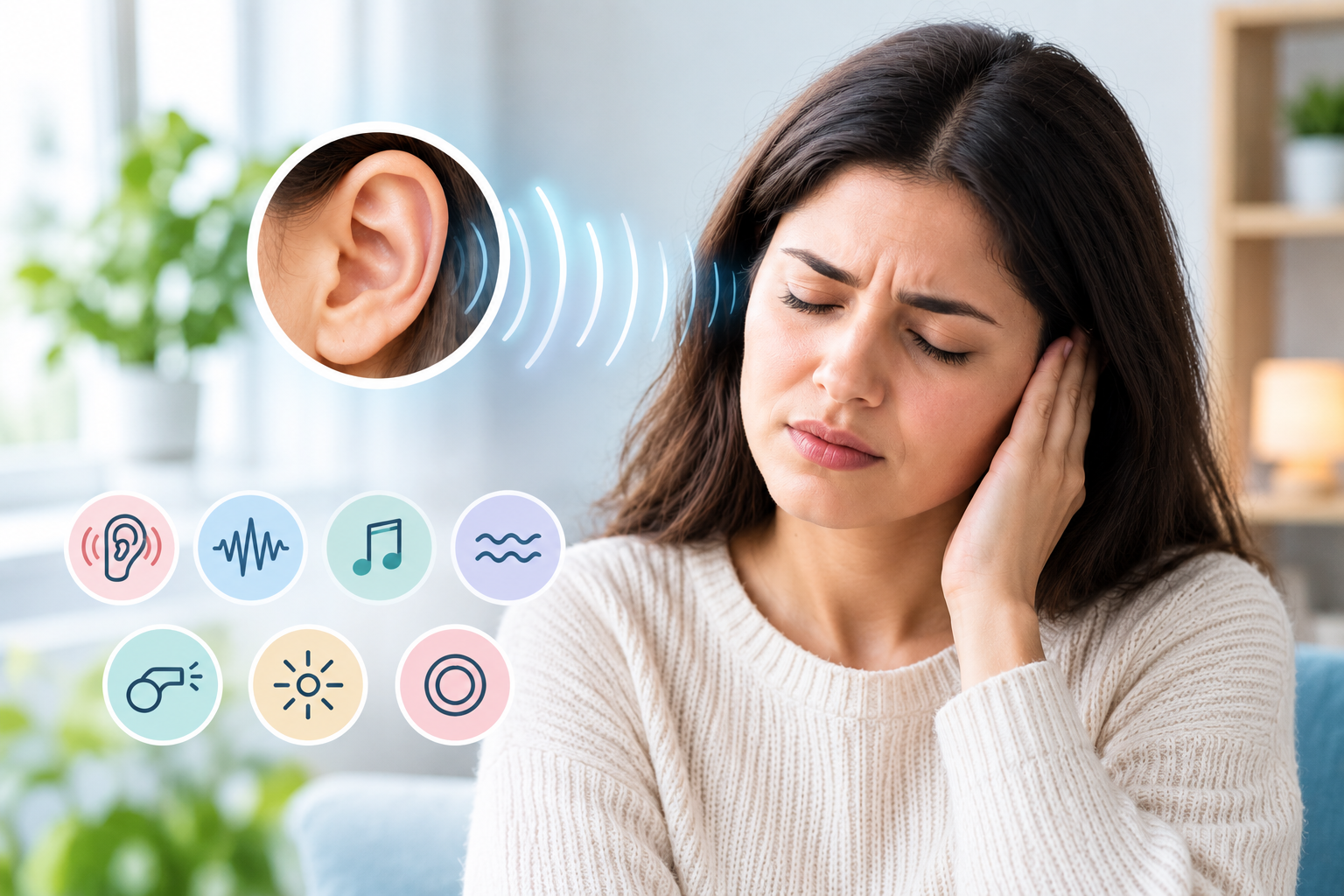
Hearing a ringing, buzzing, humming, hissing or whistling sound when there is no external source is commonly known as tinnitus. It can affect one or both ears and may be temporary or persistent.
Tinnitus is often associated with hearing loss, loud-noise exposure, earwax blockage and other ear or health conditions. While occasional ringing may settle on its own, persistent tinnitus should be assessed by a qualified hearing professional or healthcare provider, particularly when it occurs with hearing loss, dizziness or other sudden symptoms.
In this guide, we explain the common causes of tinnitus, tinnitus symptoms, how tinnitus is assessed, treatment and management options, and when to seek professional hearing care.
What Is Tinnitus?
Tinnitus is the perception of sound without an external sound source. People may experience it as:
● Ringing in the ears
● Buzzing
● Humming
● Hissing
● Whistling
● Clicking
● Pulsing or whooshing
Tinnitus may occur in one ear, both ears or seem to come from inside the head. Some people experience it occasionally, while others have persistent symptoms that affect sleep, concentration, communication or everyday activities.
Tinnitus is a symptom rather than a disease itself. Identifying possible contributing factors can help determine the most appropriate management approach.
What Causes Tinnitus?
There is no single cause of tinnitus. Common tinnitus causes include:
1. Hearing Loss
Tinnitus is frequently associated with hearing loss, including noise-induced hearing loss and age-related hearing changes.
When hearing sensitivity changes, the brain’s processing of sound can also change, which may contribute to tinnitus perception.
2. Loud Noise Exposure
Repeated exposure to loud sounds can damage the structures involved in hearing and may contribute to both hearing loss and tinnitus.
Potential sources include:
● Construction equipment
● Power tools
● Industrial machinery
● Concerts and sporting events
● Loud music
● Recreational noise
Using appropriate hearing protection around hazardous noise can help reduce the risk of noise-related hearing damage.
3. Earwax Build-Up
Excessive earwax can block the ear canal and affect hearing. In some cases, this may be associated with tinnitus.
If earwax is suspected, a qualified professional can determine whether removal is appropriate.
4. Ear Infections
Ear infections can temporarily affect hearing and may be accompanied by tinnitus, ear pain, pressure or other symptoms.
Medical assessment may be appropriate when infection is suspected.
5. Age-Related Hearing Changes
Hearing sensitivity can gradually change with age. Because hearing loss and tinnitus commonly occur together, older adults experiencing persistent ringing may benefit from a hearing assessment.
6. Stress and Poor Sleep
Stress does not necessarily cause tinnitus, but it can make existing tinnitus more noticeable or difficult to manage.
Poor sleep, fatigue and anxiety may also increase awareness of tinnitus for some people.
7. Medications and Other Health Conditions
Some medications may be associated with tinnitus as a side effect. Tinnitus can also occur alongside conditions affecting the ear, jaw, blood vessels or nervous system.
If you suspect medication is contributing to tinnitus, do not stop prescribed medication without speaking to your doctor.
What Are the Symptoms of Tinnitus?
The main symptom is hearing a sound that does not come from an external source.
Common descriptions include:
● Ringing
● Buzzing
● Humming
● Hissing
● Whistling
● Clicking
● Pulsing or whooshing
Tinnitus can also affect daily life. Some people experience:
● Difficulty concentrating
● Sleep disruption
● Difficulty hearing speech in background noise
● Increased awareness of sound
● Stress or frustration
The severity and impact vary from person to person.
What Are the Different Types of Tinnitus?
Tinnitus can be described in different ways depending on how it is experienced.
Subjective Tinnitus
This is the most common form. The sound is heard only by the person experiencing tinnitus.
It is often associated with hearing loss, noise exposure and other changes affecting the auditory system.
Objective Tinnitus
Objective tinnitus is uncommon and may sometimes be detectable by a healthcare professional. It can be associated with physical processes such as blood-flow changes or muscle activity.
Further medical investigation may be required.
Pulsatile Tinnitus
Pulsatile tinnitus sounds like a rhythmic pulsing or beating, sometimes in time with the heartbeat.
Because pulsatile tinnitus can have different underlying causes, persistent or new pulsatile tinnitus should be medically assessed.
How Is Tinnitus Diagnosed?
There is no single test that diagnoses every case of tinnitus. Assessment usually involves understanding your symptoms, hearing history and overall ear health.
A hearing assessment may include:
Hearing Test
A professional hearing test can measure hearing sensitivity across different frequencies and identify whether hearing loss is present.
Medical and Hearing History
Your hearing professional may ask about:
● When tinnitus started
● Whether it affects one or both ears
● Noise exposure
● Previous ear problems
● Hearing difficulties
● Current medications
● Other symptoms
Ear Examination
An examination may identify potential issues such as earwax blockage or other visible ear conditions.
Referral for Further Assessment
epending on your symptoms, a hearing professional may recommend further assessment by a GP, ENT specialist or another appropriate healthcare professional.
Can Tinnitus Be Treated?
There is currently no single treatment that eliminates tinnitus for everyone. Management depends on the underlying cause, hearing status and how tinnitus affects the individual.
Potential management approaches include:
Hearing Aids
If tinnitus occurs alongside hearing loss, hearing aids may help some people by improving access to environmental sounds and speech. Some hearing aids also provide tinnitus-management features.
Sound Therapy
Sound Therapy Background sounds may help reduce the contrast between tinnitus and silence. Options can include:
● Soft environmental sounds
● White noise
● Nature sounds
● Sound-generation devices
● Tinnitus-focused hearing-aid programs
Treating Contributing Ear Problems
If an underlying issue such as excessive earwax or an ear infection is identified, appropriate treatment may help reduce associated symptoms.
Tinnitus Counselling and Education
Understanding tinnitus and learning strategies to reduce its impact can be an important part of management.
Sleep and Stress Management
Improving sleep and managing stress may help some people cope with tinnitus more effectively.
The appropriate approach depends on the individual’s hearing and health circumstances.
When Should You See a Hearing Professional?
Consider arranging a professional hearing assessment if tinnitus:
● Persists or repeatedly returns
● Is affecting sleep or concentration
● Occurs alongside hearing difficulties
● Develops after significant noise exposure
● Is affecting communication or daily activities
● Occurs with other ear symptoms
When Does Tinnitus Need Urgent Medical Attention?
Some tinnitus symptoms require prompt medical assessment.
Seek urgent medical attention if tinnitus occurs with sudden hearing loss, particularly if the hearing change develops suddenly in one or both ears.
Medical assessment is also important for new or persistent tinnitus accompanied by symptoms such as significant dizziness, neurological symptoms, severe ear pain or other concerning changes.
Can Hearing Aids Help With Tinnitus?
They can help some people, particularly when tinnitus occurs alongside hearing loss.
By improving access to external sounds, hearing aids may make tinnitus less noticeable for some individuals. Certain hearing aids also offer tinnitus-management or sound-generation features.
A hearing professional can assess your hearing and discuss whether hearing technology may be appropriate for your circumstances.
Tinnitus and Hearing Loss: Is There a Connection?
Yes. Tinnitus and hearing loss frequently occur together.
Noise exposure and age-related hearing changes are common examples where a person may experience both conditions.
However, having tinnitus does not automatically mean you have hearing loss. A hearing assessment can determine whether measurable hearing loss is present.
How Can You Manage Tinnitus at Home?
There is no universal home remedy for tinnitus, but some strategies may make symptoms easier to manage.
You may find it helpful to:
● Avoid prolonged exposure to loud noise
● Use appropriate hearing protection around hazardous noise
● Maintain a consistent sleep routine
● Reduce excessive stress where possible
● Use gentle background sound in quiet environments
● Monitor changes in your hearing
● Arrange a professional assessment if symptoms persist
Tinnitus Care at Welfast Hearing
If you are experiencing persistent ringing, buzzing or other unexplained sounds in your ears, Welfast Hearing can assess your hearing and discuss appropriate hearing-care options.
Depending on your needs, hearing services may include:
● Professional hearing assessments
● Micro suction earwax removal
Welfast Hearing provides hearing care across selected locations including Bateau Bay, Morisset, Central Mangrove, Woongarrah, West Gosford and The Entrance, subject to current clinic services and availability.
A hearing assessment can help establish whether hearing loss may be contributing to your tinnitus and whether hearing-care options could be appropriate.
Conclusion
Persistent ringing, buzzing, humming or whistling in your ears can have several possible causes, including hearing loss, loud-noise exposure, earwax blockage and other ear or health conditions.
The most useful first step is to understand why the tinnitus is occurring and whether hearing loss is also present. A professional hearing assessment can help evaluate your hearing and identify appropriate next steps.
If tinnitus is affecting your everyday life, Welfast Hearing can help you assess your hearing and explore suitable hearing-care options.
Book a hearing assessment with Welfast Hearing to take the next step towards understanding your tinnitus and hearing health.
FAQs About Tinnitus
What is the most common cause of tinnitus?
Tinnitus is commonly associated with hearing loss and exposure to loud noise. Other possible contributors include earwax blockage, ear conditions, certain medications and other health conditions.
Can tinnitus go away by itself?
Temporary tinnitus may settle when the underlying trigger resolves. Persistent or recurring tinnitus should be assessed to identify possible contributing factors.
Is tinnitus a sign of hearing loss?
Tinnitus is frequently associated with hearing loss, but it does not always mean hearing loss is present. A hearing test can help determine whether you have measurable hearing changes.
Can stress make tinnitus worse?
Yes. Stress, fatigue and poor sleep may make existing tinnitus more noticeable or harder to manage for some people.
Can hearing aids help tinnitus?
Hearing aids may help some people who have tinnitus alongside hearing loss. They can improve access to external sounds, and some devices include tinnitus-management features.
Why is only one ear ringing?
Tinnitus can occur in one ear or both. Persistent or unexplained tinnitus affecting only one ear should be assessed by an appropriate healthcare professional.
When should I worry about ringing in my ears?
Seek prompt medical assessment if tinnitus occurs with sudden hearing loss, significant dizziness, neurological symptoms or other concerning symptoms. New pulsatile tinnitus should also be medically assessed.