
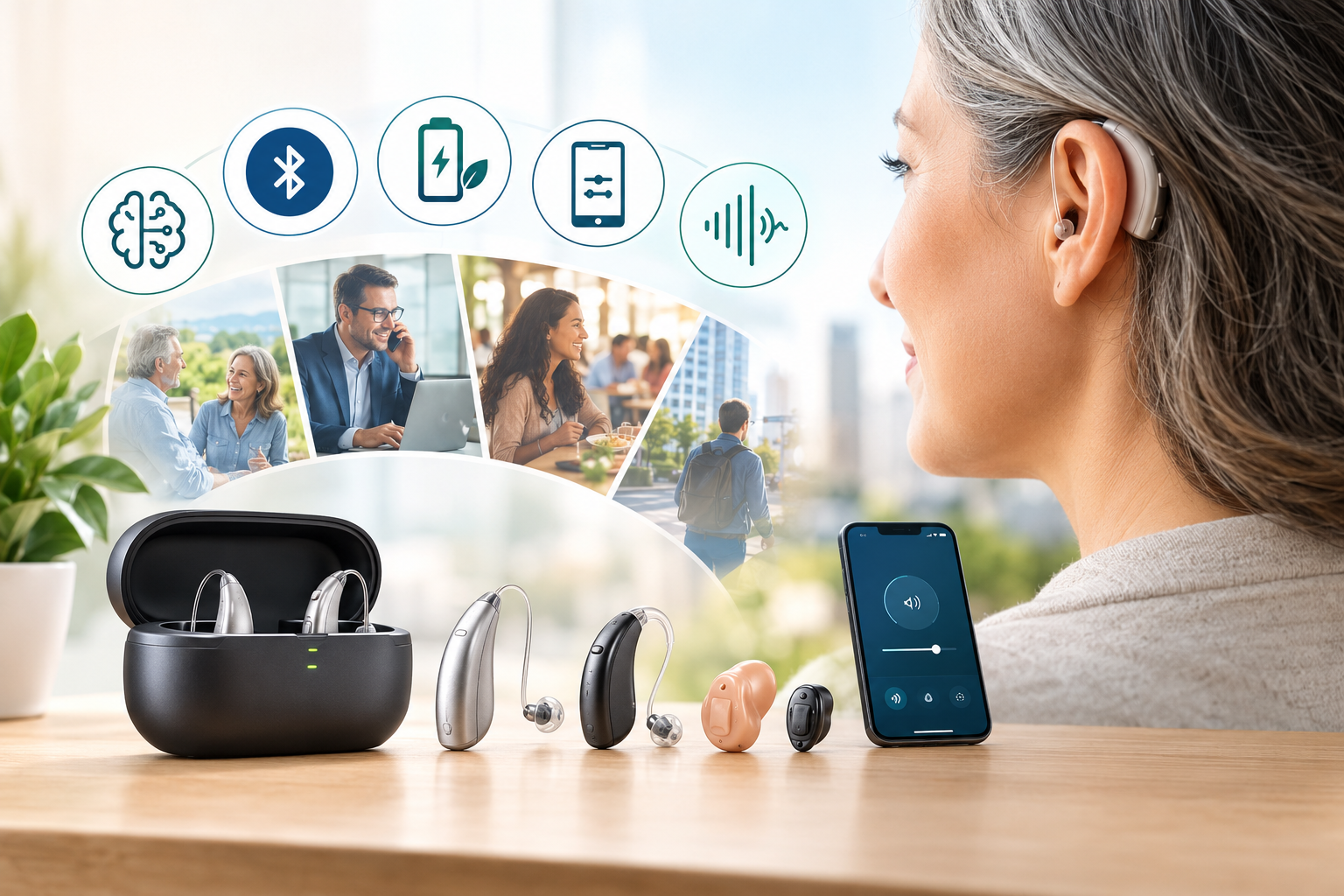
Choosing the right hearing aids in 2026 is no longer just about amplification—it’s about smart technology, comfort, and lifestyle compatibility. With advancements in AI-based sound processing, Bluetooth connectivity, and adaptive noise control, modern devices offer a highly personalized hearing experience. However, with so many brands and features available, selecting the best option can feel overwhelming. This guide breaks down the top hearing aids in 2026, comparing features, technology, and performance to help you make a confident and informed decision.
● Hearing aids now use AI for smarter sound clarity and noise reduction
● Top brands offer Bluetooth, rechargeability, and app control features
● RIC models dominate due to comfort and natural sound quality
● Price varies based on technology level and customization
● Professional fitting remains essential for best performance
What Makes a Hearing Aid “Best” in 2026?
The definition of the “best” hearing aids has evolved significantly. In 2026, performance is measured not just by sound amplification but by intelligence, adaptability, and user experience.
Key Performance Factors
● Speech clarity in noisy environments
● Automatic environmental adjustment
● Comfort and long-term wearability
● Battery efficiency and rechargeability
● Connectivity with smart devices
Modern users expect seamless integration into daily life, making intelligent processing more important than raw volume.
Key Features to Look for in Modern Hearing Aids
Understanding features helps narrow down the right device based on personal needs.
AI-Based Sound Processing
Artificial intelligence now allows hearing aids to analyze environments in real time and enhance speech while reducing background noise.
Adaptive Noise Cancellation
This feature automatically reduces unwanted sounds like wind, traffic, or crowd noise without distorting speech.
Bluetooth Connectivity
Most modern devices connect directly to smartphones, TVs, and laptops for clear audio streaming.
Rechargeable Batteries
Rechargeable models are replacing disposable batteries, offering convenience and cost savings.
App Control & Personalization
Mobile apps allow users to adjust volume, switch modes, and even receive remote support from audiologists.
Best Hearing Aid Types Compared
Different hearing aid styles serve different needs and comfort levels.
Receiver-in-Canal (RIC)
Most popular in 2026 due to balanced performance and discreet design. Best for: Mild to severe hearing loss
Behind-the-Ear (BTE)
Powerful and durable with strong amplification. Best for: Severe hearing loss
In-the-Ear (ITE)
Custom-fit devices offering ease of handling.
Best for: Mild to moderate hearing loss
Completely-in-Canal (CIC)
Nearly invisible design but limited features due to size. Best for: Mild hearing loss
Top Hearing Aid Brands in 2026
Several global manufacturers lead the market with advanced innovations and reliability.
Phonak
Known for powerful AI-driven speech clarity and strong noise management systems. Popular for active lifestyle users.
Oticon
Focuses on brain-hearing technology that supports natural sound processing and improved cognitive listening.
Signia
Offers sleek designs with advanced app-based personalization and rechargeable solutions.
ReSound
Strong Bluetooth ecosystem with excellent smartphone connectivity and natural sound balance.
Widex
Known for ultra-clear sound quality and minimal distortion in complex environments.
Starkey
A leader in health-focused hearing technology, Starkey integrates advanced features like fall detection, activity tracking, and AI-based sound optimization. Ideal for users looking for both hearing enhancement and wellness monitoring in a single device.
Smart Technology in Today’s Hearing Aids
Modern hearing aids are now intelligent digital health devices.
Machine Learning Adaptation
Devices learn user preferences over time and automatically adjust sound settings.
Environmental Detection
Sensors identify whether you are in a quiet room, busy street, or social gathering and adapt accordingly.
Spatial Awareness Enhancement
Improves directional hearing, helping users understand where sounds are coming from.
Health Integration Features
Some models track activity levels and ear usage patterns for better long-term hearing health management.
How to Choose the Right Device
Selecting the right hearing aid depends on both medical and lifestyle factors.
Understand Your Hearing Loss Level
A professional audiogram is essential before selecting any device.
Match Lifestyle Needs
● Active users → Bluetooth + AI models
● Seniors → easy-to-use rechargeable models
● Professionals → noise-canceling speech-focused devices
Prioritize Comfort
Even the most advanced device is ineffective if not comfortable for daily use.
Consider Aftercare Support
Regular tuning and servicing ensure long-term performance and satisfaction.
Common Mistakes to Avoid
Many users reduce effectiveness by making avoidable errors.
● Choosing based only on price
● Ignoring professional fitting
● Expecting instant adjustment
● Overlooking maintenance
requirements
● Skipping follow-up consultations
Avoiding these ensures better long-term hearing outcomes.
Conclusion
Modern hearing aids in 2026 are powerful smart devices designed to transform how people experience sound in everyday life. With innovations in AI, connectivity, and personalized sound processing, users can now enjoy clearer conversations and greater confidence in any environment. For expert guidance, personalized fitting, and trusted hearing solutions, Welfast Hearing offers reliable support to help you choose the right device and improve your hearing experience with confidence and clarity.
FAQs
What are the best hearing aids in 2026?
The best hearing aids in 2026 combine AI sound processing, Bluetooth connectivity, and adaptive noise cancellation for clearer and more natural hearing.
Which hearing aid brand is most reliable?
Brands like Phonak, Oticon, Signia, ReSound, and Widex are highly trusted for advanced features, comfort, and long-term performance reliability.
Are rechargeable hearing aids better?
Yes, rechargeable hearing aids are more convenient, eco-friendly, and cost-effective compared to traditional battery-powered models.
How long do modern hearing aids last?
Most modern hearing aids last between four to seven years, depending on usage, maintenance, and technological upgrades over time.
Do hearing aids work in noisy places?
Yes, advanced hearing aids use AI-based noise reduction and directional microphones to improve speech clarity in noisy environments effectively.