
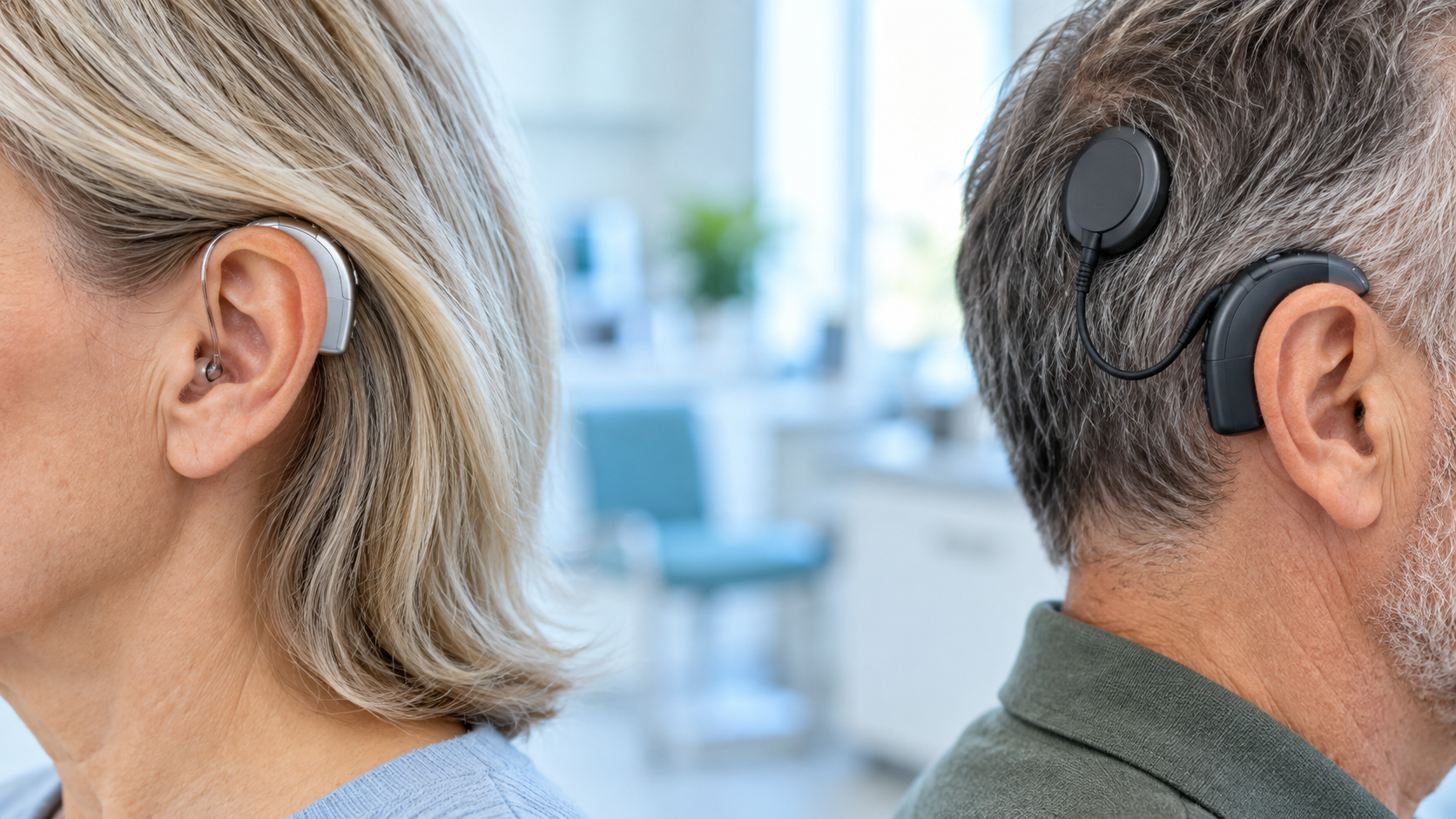
Choosing between hearing aids and hearing implants can feel overwhelming, especially when both options promise better hearing and improved quality of life. While hearing aids are external devices that amplify and process sound, hearing implants are surgically placed solutions designed for more severe or specific types of hearing loss. Understanding the key differences, benefits, limitations, and suitability of each option is essential before making a decision. This expert guide breaks down everything you need to know to choose the right hearing solution confidently.
● Hearing aids are non-surgical external sound-processing devices
● Hearing implants require surgery and treat severe hearing loss
● Hearing aids suit mild to moderate hearing loss cases
● Implants are recommended when hearing aids are ineffective
● Professional diagnosis is essential before choosing either option
What Are Hearing Aids?
Hearing aids are small electronic devices worn either behind or inside the ear. They capture sound through a microphone, process it digitally, and deliver amplified sound into the ear canal.
Modern hearing aids use advanced features such as:
● AI-based noise reduction
● Directional microphones
● Speech enhancement algorithms
● Bluetooth connectivity
They are non-invasive, adjustable, and widely used for mild to moderate hearing loss.
What Are Hearing Implants?
Hearing implants are medical devices surgically placed inside the ear or skull to directly stimulate auditory nerves or inner ear structures.
Common types include:
● Cochlear implants
● Bone conduction implants
Unlike hearing aids, implants bypass damaged parts of the ear and directly transmit sound signals to the brain.
Key Differences Between Hearing Aids and Implants
Method of Sound Delivery
● Hearing Aids: Amplify and process sound externally
● Hearing Implants: Directly stimulate inner ear or auditory nerve
Surgical Requirement
● Hearing Aids: No surgery required
● Hearing Implants: Requires surgical procedure
Level of Hearing Loss Treated
● Hearing Aids: Mild to moderate (sometimes severe)
● Hearing Implants: Severe to profound hearing loss
Adjustability
● Hearing Aids: Easily adjustable and replaceable
● Hearing Implants: Requires medical programming and follow-ups
Benefits of Hearing Aids
Non-Invasive and Easy to Use
Hearing aids require no surgery and can be fitted quickly by professionals.
Advanced Sound Processing
Modern devices improve speech clarity and reduce background noise effectively.
Customizable Experience
Settings can be adjusted based on environment and user preference.
Affordable Entry Point
Compared to implants, hearing aids are generally more accessible financially.
Clinics such as Hearing Australia and Specsavers Audiology commonly recommend hearing aids as the first step in hearing correction.
Benefits of Hearing Implants
Effective for Severe Hearing Loss
Implants provide access to sound when hearing aids are no longer effective.
Improved Speech Understanding
They can significantly improve clarity in cases of profound hearing loss.
Long-Term Hearing Solution
With proper care, implants offer stable long-term hearing improvement.
Suitable for Specific Medical Conditions
Helpful for individuals with damaged inner ear structures or nerve-related hearing loss.
Who Should Choose Hearing Aids?
Hearing aids are ideal if:
● You have mild to moderate hearing loss
● You can still hear some speech naturally
● You want a non-surgical solution
● You prefer adjustable, removable devices
Most individuals begin with hearing aids before exploring other options.
Who Should Consider Hearing Implants?
Hearing implants may be suitable if:
● Hearing aids no longer improve clarity
● You have severe or profound hearing loss
● Inner ear damage is diagnosed
● You struggle to understand speech even with amplification
A detailed medical evaluation is essential before deciding on implantation.
Cost, Recovery & Maintenance Comparison
Cost
● Hearing Aids: Lower upfront cost, multiple price ranges
● Hearing Implants: Higher initial cost due to surgery and device complexity
Recovery Time
● Hearing Aids: Immediate use after fitting
● Hearing Implants: Requires healing and adjustment period
Maintenance
● Hearing Aids: Regular cleaning and battery or charging
● Hearing Implants: Medical follow-ups and device tuning
Risks and Limitations
Hearing Aids
● May not fully restore hearing in severe cases
● Requires regular adjustments
Hearing Implants
● Surgical risks involved
● Longer adaptation period
● Requires medical monitoring
Understanding these limitations helps set realistic expectations before treatment.
Conclusion
Choosing between hearing aids and hearing implants depends entirely on the level of hearing loss, medical condition, and lifestyle needs. While hearing aids remain the most common and non-invasive solution for many individuals, implants provide advanced support for severe cases where traditional devices are no longer effective. A professional evaluation ensures the safest and most effective choice. For personalized guidance, advanced hearing solutions, and expert care, Welfast Hearing offers trusted support to help you regain clarity and confidence in everyday life.
FAQs
What is the main difference between hearing aids and implants?
Hearing aids amplify sound externally, while implants directly stimulate inner ear or auditory nerves.
Are hearing implants better than hearing aids?
Not always. Implants are used only for severe hearing loss when hearing aids are ineffective.
Do hearing implants require surgery?
Yes, hearing implants require a surgical procedure performed by specialists.
Can hearing aids restore normal hearing?
Hearing aids significantly improve hearing but do not fully restore natural hearing ability.
. How do I know which option is right?
A professional hearing test is essential to determine the most suitable hearing solution.