
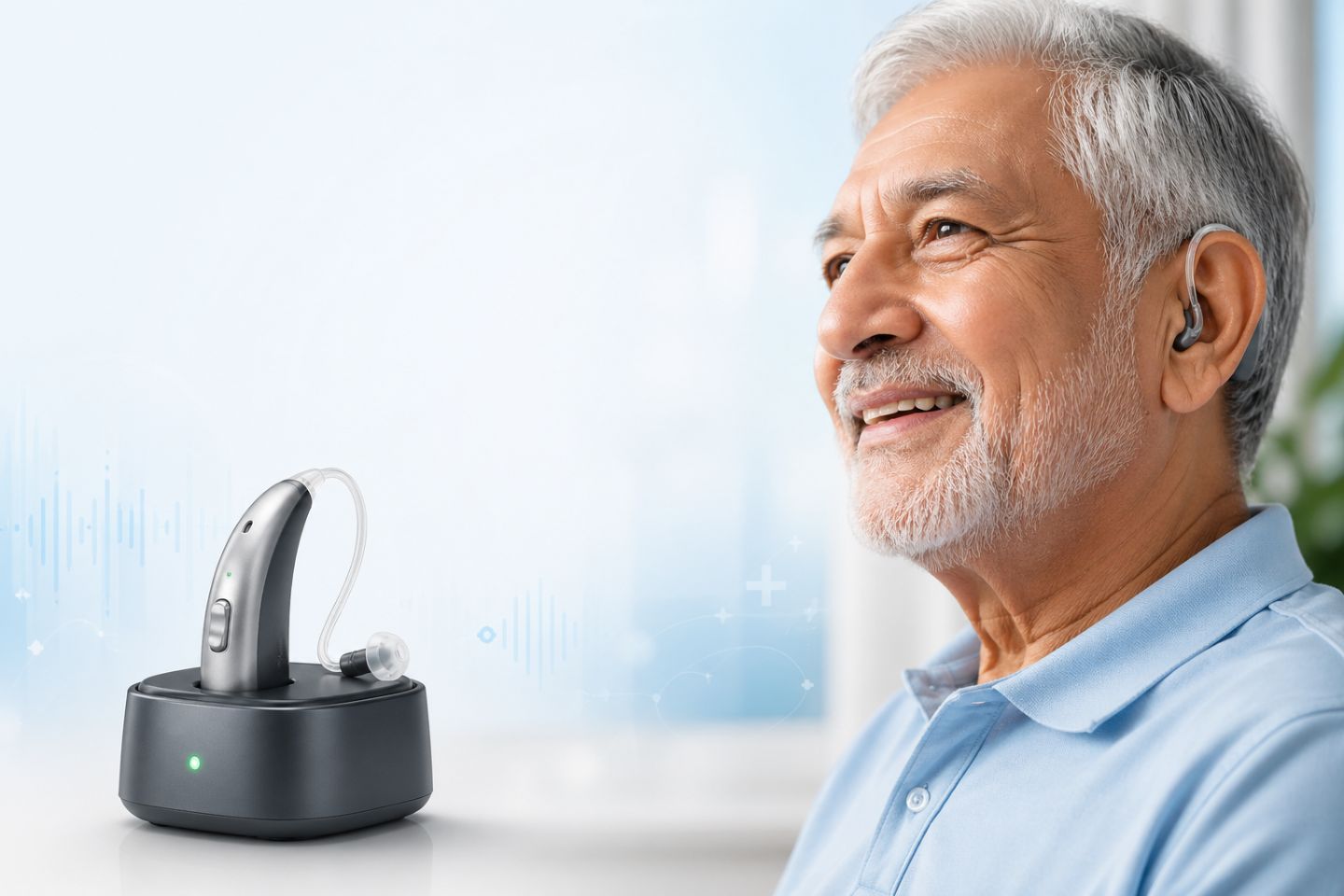
Looking for a modern, low-maintenance hearing solution? Rechargeable hearing aids are advanced digital devices powered by built-in lithium-ion batteries, offering all-day performance without the need for disposable batteries.
In this 2026 guide, we explain how rechargeable hearing aids work, their benefits, battery life, types, and how to choose the right one for your needs.
What are rechargeable hearing aids?
Rechargeable hearing aids are digital hearing devices with built-in lithium-ion batteries that last 16–24 hours per charge and eliminate the need for disposable batteries.
Key Features of Rechargeable Hearing Aids
- Built-in lithium-ion rechargeable batteries
- 16–24 hours usage per charge
- Overnight charging system
- Bluetooth connectivity for streaming
- AI-based noise reduction and speech clarity
Types of Rechargeable Hearing Aids
1. Behind-the-Ear (BTE)
- Suitable for moderate to severe hearing loss
- High amplification power
2. Receiver-in-Canal (RIC) (Most Popular)
- Natural sound quality
- Lightweight and discreet
3. In-the-Ear (ITE)
- Custom-fit design
- Easy handling
Benefits of Rechargeable Hearing Aids for Daily Use
No Battery Replacement: No need to handle small batteries
- Convenience: Easy overnight charging
- Cost-Effective: Saves long-term battery costs
- Eco-Friendly: Reduces environmental waste
- Advanced Features: Bluetooth, mobile apps, AI sound processing
Battery Life Explained
- Usage: 16–24 hours per charge
- Charging time: 3–6 hours
- Battery lifespan: 4–6 years
Fast Charging:
30 minutes charge = several hours of use
Rechargeable vs Traditional Hearing Aids
Rechargeable Hearing Aids
- Built-in lithium-ion battery
- High convenience – just charge daily
- Lower long-term cost (no need to buy batteries)
- Low maintenance
- Eco-friendly (reduces waste)
Traditional Hearing Aids
- Uses disposable batteries (zinc-air)
- Moderate convenience – requires frequent battery changes
- Higher long-term cost (ongoing battery purchases)
- More maintenance needed
- Produces more waste
Who Should Use Rechargeable Hearing Aids?
- Seniors with dexterity issues
- Active individuals needing all-day use
- First-time hearing aid users
- Mild to severe hearing loss patients
- Users seeking low-maintenance devices
What to Look for Before Buying Rechargeable Hearing Aids
- Sound quality (AI noise reduction)
- Bluetooth connectivity
- Battery performance (minimum 16 hours)
- Durability (water/dust resistance)
- Comfort and fit
Are Rechargeable Hearing Aids Worth It in 2026?
Yes. Rechargeable hearing aids are now the preferred choice due to:
- Improved battery technology
- Better sound processing
- Lower maintenance
- Higher user satisfaction
Best Rechargeable Hearing Aids for Seniors (2026)
When choosing the best rechargeable hearing aids for seniors, look for:
- Easy handling and simple controls
- Long battery life (16–24 hours)
- Comfortable fit for all-day use
- Clear speech enhancement technology
- Reliable after-sales support
Common Myths
- Myth: Battery doesn’t last
Reality: Lasts full day
- Myth: Only for seniors
Reality: Suitable for all
- Myth: Expensive
Reality: Lower long-term cost
Which Rechargeable Hearing Aid Is Best for You?
- Choose RIC → if you want natural sound
- Choose BTE → if you need more power
- Choose ITE → if you prefer discreet design
Conclusion
Rechargeable hearing aids offer a smart, convenient, and cost-effective solution for modern hearing needs. With advanced features and reliable battery performance, they are ideal for everyday use. Book a professional hearing test with Welfast Hearing today and find the right rechargeable hearing aid tailored to your needs.
FAQs
How long do rechargeable hearing aids last per charge?
Rechargeable hearing aids typically last 16–24 hours on a full charge, depending on usage, Bluetooth streaming, and sound processing features.
How many years does a rechargeable hearing aid battery last?
The built-in lithium-ion battery usually lasts 4–6 years before needing replacement, depending on daily usage and charging habits.
Are rechargeable hearing aids better than battery-operated ones?
Yes, rechargeable hearing aids are generally better for most users because they offer greater convenience, lower long-term costs, and advanced features like Bluetooth connectivity.
Can rechargeable hearing aids be used while charging?
No, most rechargeable hearing aids must be placed in a charging dock and cannot be worn while charging. However, fast-charging features provide quick backup usage.
Do rechargeable hearing aids work for severe hearing loss?
Yes, many modern rechargeable models are designed to support moderate to severe hearing loss with powerful amplification and advanced sound processing.