
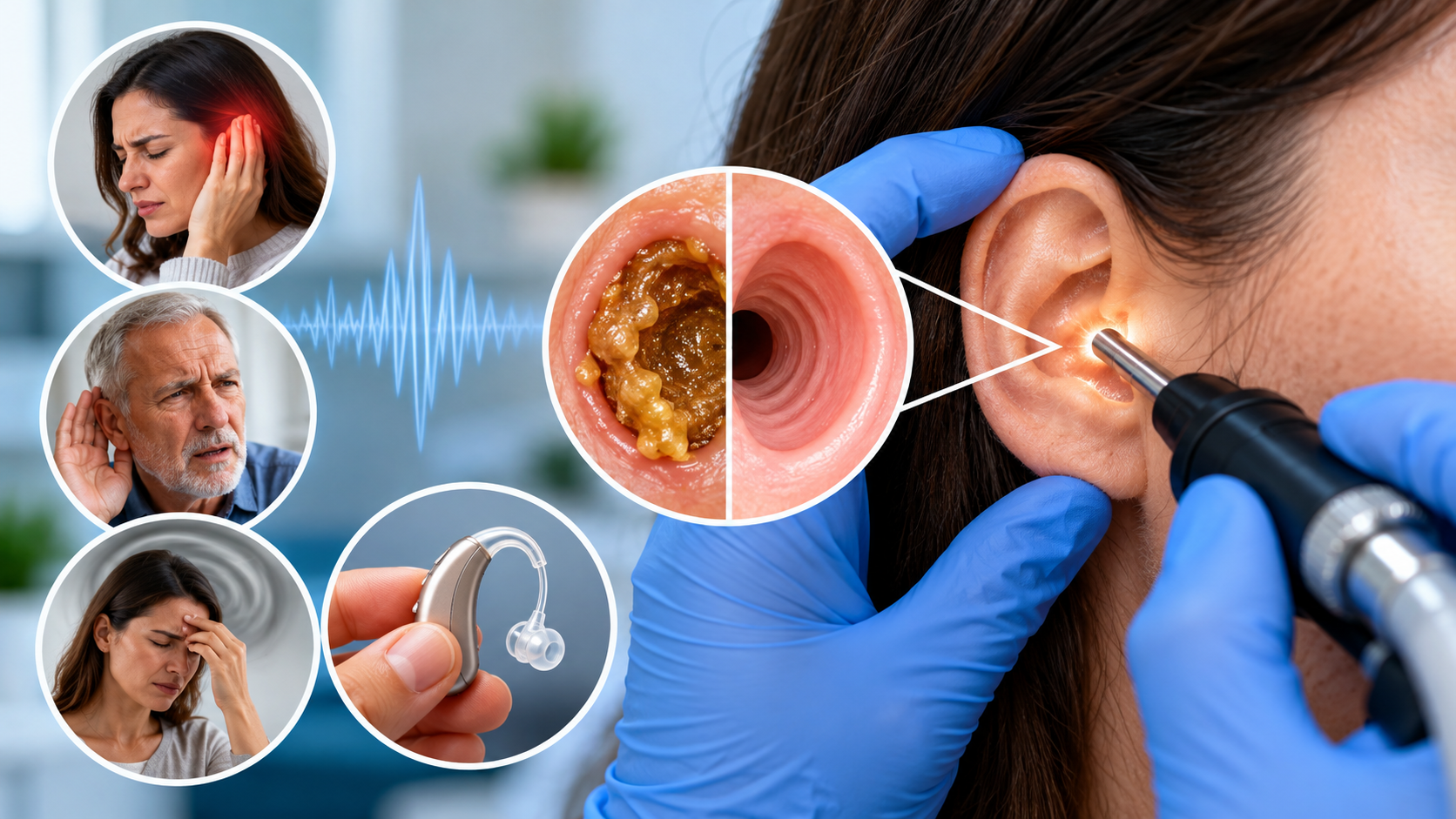
Blocked ears, muffled hearing, or sudden sound distortion can feel frustrating and even alarming especially if you rely on hearing clarity every day. In many cases, the real cause is not hearing loss itself, but ear wax buildup that requires Micro Suction Ear Wax Removal.
What makes this tricky is that symptoms often develop gradually, so most people ignore early warning signs until hearing becomes noticeably affected. For hearing aid users, the problem can escalate even faster, leading to feedback noise, reduced device performance, and communication difficulties.
Understanding when micro suction is needed can prevent long-term ear canal blockage and protect your hearing health before complications arise.
What Is Micro Suction Ear Wax Removal and When Do You Need It?
Micro Suction Ear Wax Removal is a safe clinical procedure that uses gentle suction to remove impacted ear wax from the ear canal. You need it immediately if you experience muffled hearing, ear fullness, pain, dizziness, or hearing aid blockage affecting sound clarity and daily communication.
What You Should Know About Micro Suction Ear Wax Removal
● Micro suction safely removes ear wax without water or trauma
● It is the preferred method for hearing aid users
● Symptoms include blocked hearing, fullness, and feedback noise
● Delayed treatment may worsen hearing and discomfort
● Professional removal ensures fast, precise, and safe results
What is Micro Suction Ear Wax Removal? (Clinical Definition)
Micro Suction Ear Wax Removal is a medically approved ear cleaning procedure where a trained audiologist or clinician uses a controlled suction device to remove excess or impacted cerumen (ear wax) from the ear canal.
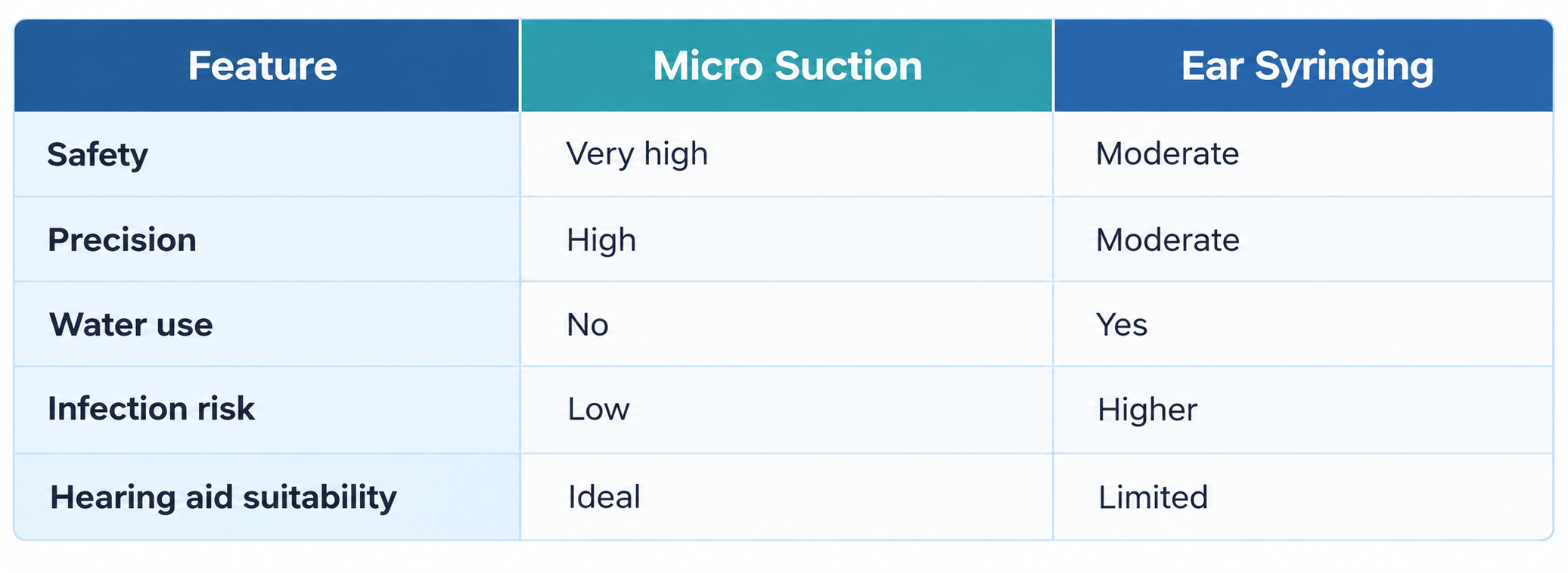
Unlike ear syringing, it does not use water, which significantly reduces infection risk and makes it safer for sensitive ears.
According to audiology standards, micro suction is considered the gold standard for safe ear wax removal, especially in patients using hearing aids.
Why Micro Suction Ear Wax Removal Matters for Hearing Health
Ear wax is protective, but when it becomes impacted, it blocks sound transmission and affects hearing clarity.
This becomes more serious for hearing aid users because devices can trap wax and accelerate buildup.
Experts recommend early intervention because untreated wax can lead to temporary hearing loss, discomfort, and device malfunction.
Real-world impact includes:
● Difficulty understanding speech
● Reduced hearing aid performance
● Increased ear pressure or discomfort
Causes of Ear Wax Buildup (Why It Happens)
Understanding the causes of ear wax buildup is essential for preventing recurring blockages and maintaining healthy hearing.
Common Causes
● Hearing aid usage blocking natural wax migration
● Overproduction of cerumen (ear wax)
● Improper cleaning habits such as using cotton buds
● Naturally narrow or curved ear canals
● Aging-related wax hardening
Clinical Factors
● Excess hair in the ear canal trapping wax and debris
● Collapsed or narrowing ear canals due to aging
● History of outer ear infections affecting wax movement
● Altered ear canal structure after ear-related surgeries
● Skin conditions (such as eczema or dermatitis) inside the ear canal
● Reduced skin elasticity in the ear canal with age
Signs You Need Micro Suction Ear Wax Removal Immediately
Early detection is critical for preventing complications.
Key symptoms:
● Muffled or reduced hearing
● Sensation of ear fullness or blockage
● Hearing aid feedback (whistling noise)
● Ear itching or irritation
● Mild dizziness or imbalance
● Sudden drop in sound clarity
Healthcare professionals suggest immediate evaluation if symptoms persist beyond a few days.
How Micro Suction Ear Wax Removal Works
The procedure is quick, precise, and usually completed within minutes.
Process:
1. Ear canal examination using otoscope
2. Identification of wax blockage
3. Controlled suction removal using micro device
4. Final inspection for full clearance
According to clinical practice, most patients experience instant improvement in hearing clarity.
Micro Suction vs Ear Syringing
What to Avoid Before Ear Wax Removal
Improper habits can worsen blockage.
Avoid:
● Cotton buds or sharp objects
● DIY ear irrigation
● Ear candles (ineffective and unsafe)
● Overuse of ear drops without guidance
According to audiology standards, these methods often push wax deeper into the canal.
Prevention Tips for Long-Term Ear Health
Preventive care reduces recurrence.
Best practices:
● Clean only the outer ear gently
● Schedule routine hearing check-ups
● Maintain properly fitted hearing aids
● Replace wax guards regularly
● Keep ears dry after bathing
Consider a routine hearing test guide for early detection and monitoring.
When to See a Hearing Specialist Immediately
Do not delay treatment if symptoms escalate.
Seek professional help if:
● Sudden hearing loss occurs
● Pain or pressure increases
● Hearing aid stops functioning
● Persistent dizziness develops
Cost and Clinical Insight (Welfast Hearing)
Micro suction is an outpatient, non-invasive procedure performed in clinics like Welfast Hearing.
It is:
● Fast (10–20 minutes)
● Safe and painless
● Effective with immediate relief
Most patients notice instant improvement in hearing clarity after treatment.
Conclusion
Recognizing early signs of ear wax buildup is essential for maintaining healthy hearing and protecting hearing aid performance. Micro Suction Ear Wax Removal provides a safe, precise, and clinically trusted solution for restoring clear hearing without discomfort.
If you are experiencing blocked ears, reduced sound clarity, or hearing aid issues, timely action is important to prevent worsening symptoms. Book an appointment with Welfast Hearing today for expert guidance and better results.
FAQs
Is Micro Suction Ear Wax Removal safe?
Yes, it is safe when performed by trained audiologists using sterile clinical equipment.
How long does micro suction take?
It usually takes 10–20 minutes depending on severity of ear wax buildup.
Is micro suction better than ear syringing?
Yes, it is safer, more precise, and preferred for hearing aid users.
Does micro suction hurt?
No, it is painless; patients may only hear mild suction noise during treatment.
How often should ear wax be removed?
Most individuals require cleaning every three to six months depending on wax production levels.